What to See in Avilés, Asturias in One Day: A Walking Itinerary


Avilés may be smaller than its Asturian neighbors, Oviedo and Gijón, but this coastal gem charmed me instantly with its medieval character and modern cultural energy. On our trip to Asturias, we visited Avilés on a day trip from Oviedo, starting with a morning visit to the colorful fishing village of Cudillero. Having experienced its timeless streets and impressive cultural landmarks, I believe Avilés deserves more than a quick visit. I would definitely recommend spending at least one full day here.
Once a bustling port town, Avilés has reinvented itself as a city of art, architecture, and history—ideal for a leisurely day of exploration. This walking itinerary will lead you through elegant plazas, arcaded streets, riverside promenades, and the futuristic Niemeyer Center, revealing the best of Avilés at a relaxed, immersive pace.
🧭 Quick Tips for Your Trip to Avilés
These are the trusted platforms I personally use when planning my travels 👇
- 🏨 Hotels: I usually compare prices and availability on Booking.com, which has a fantastic selection of boutique stays and easy cancellation policies. I also love checking Hotels.com to collect free nights through their rewards program.
- 🚗 Car Rental: For road trips around Asturias, I recommend DiscoverCars. It lets you compare top rental companies in one place, often with free cancellation and full insurance options — a huge plus when exploring coastal towns and scenic countryside.
- 🎟️ Tours & Activities: To experience Avilés and nearby gems like a local, I book through GetYourGuide and Viator. Both platforms offer curated tours with trusted operators, easy online booking, and flexible cancellation — ideal for last-minute plans or spontaneous adventures.
What to See in Avilés, Asturias in One Day
Oscar Niemeyer International Cultural Centre – Modern Icon

If you’re arriving by car, the easiest place to begin your day is by parking near the Oscar Niemeyer International Cultural Center, located on the western side of the Ría de Avilés. There’s a large, affordable public parking lot right next to the complex, making it an ideal base for exploring the city on foot.
The Centro Niemeyer is a masterpiece created by Brazilian architect Oscar Niemeyer. Its curving white forms, bright yellow dome, and striking observation tower create a bold contrast with the industrial riverfront. This is a perfect example of how Avilés has reinvented itself as a modern cultural hub.


If the center is open, step inside for a quick look at the exhibition spaces or take the elevator up to the tower for panoramic city views. Unfortunately, when we got here, the center was closed.
👉 Tip: For a truly special experience, consider booking a table at Yume Restaurante, the Michelin-recommended restaurant housed within the Niemeyer Center, offering stunning views of the town.
This article contains some affiliate links, which means that if you make a purchase through these links, we may earn a small commission—at no extra cost to you. Every purchase helps keep this website running. I hope that you find the information helpful.
Yume’s creative menu showcases Asturian produce with elegance and a modern twist. The restaurant also serves a lunch menu. Please check their website for details.
✨ Avilés: Discover its Historical Center
- The tour guide is a native of Avilés and an expert in the history of the town.
- Learn about the history of the town with an official Avilés tour guide.
- In two hours, you will discover a town that is as unknown as it is welcoming.
Stroll Along the Paseo de la Ría de Avilés

Before crossing into the historic center, take a few extra minutes to enjoy the Paseo de la Ría de Avilés, the riverside promenade that stretches along the estuary. Starting right next to the Niemeyer Center, this pedestrian-friendly path offers expansive views of the water, the port’s industrial heritage, and the city’s evolving skyline.

Step Back in Time: Strolling Through Avilés’ Historic Centre
After enjoying the river views along the Paseo de la Ría, we crossed the pedestrian bridge and found ourselves at the entrance to one of the most striking historic centres in northern Spain.


Avilés’ Old Town is a masterpiece of authenticity. As we strolled through its cobbled streets, we couldn’t help but notice that everything stands stone by stone as it was originally built. There are hardly any reconstructions or recreations — it seems like the old Avilés has withstood the centuries and the vicissitudes of history like few other places in Asturias.
For a moment, I let myself be carried away by the surrounding atmosphere, and it truly felt as if I had stepped back into the Middle Ages or the Golden Age, when Avilés flourished as a bustling trading port.


What makes this quarter so unique is not only the age of its buildings, but also the authenticity of its arcaded streets. Many of them are lined with stone arches reminiscent of cloisters, creating a sheltered labyrinth that gives Avilés its distinctive character. In fact, this is the largest arcaded historic centre in the whole of Asturias — a living architectural treasure.

The epicentre of Avilés is Plaza de España, home to the Town Hall, from which the city’s most characteristic streets branch out like spokes on a wheel, reflecting the town’s long-standing cosmopolitan vocation.
Streets with names such as Galiana, Rivero, La Ferrería, Bances Candamo, La Cámara, La Fruta, San Bernardo, or La Estación are some of the most memorable here.
Ferrera Palace (Palacio de Ferrera)

Located on the edge of Plaza de España, the Ferrera Palace is one of the oldest Baroque buildings in Asturias. Built as the residence of the Marquis of Ferrera, it remained in the family until 1974. It even served as a guesthouse for the Spanish royal family when they visited the region. In 2003, the palace was carefully restored and transformed into a five-star hotel by NH Hoteles, blending its historic grandeur with modern luxury.
🌊 From Oviedo: Luarca, Cudillero & Avilés Day Trip
Take a guided day trip along the Asturias coast from Oviedo. Explore the picturesque seaside village of Luarca, stroll through the charming streets and enjoy lunch in Cudillero, and discover Avilés’ historic center.
Duration: 10 hours
Admire the Church of San Nicolás de Bari

Just a short stroll from Plaza de España stands the Church of San Nicolás de Bari, one of Avilés’ most important medieval monuments. Dating back to the 13th century, this Romanesque-Gothic church invites you to pause and admire its stone façades, arched portals, and the tranquil cloister, which feels like a hidden oasis in the heart of the city.


Fuente de los Caños de San Francisco
The Fuente de los Caños de San Francisco is located on Calle San Francisco. You will spot it once you reach the Church of San Nicolás de Bari.

This elegant stone fountain, adorned with multiple spouts carved into human faces, has been quenching the city’s thirst for centuries. It was once a vital water source where locals gathered daily to fill their pitchers, making it an essential part of Avilés’ social life.
Lunch Stop: A Spanish Midday Tradition
By the time we reached the heart of Avilés, it was already lunchtime — and in Spain, lunch is practically a constitution. Midday meals are the main event of the day, often enjoyed unhurriedly. Many local restaurants offer affordable menús del día that typically include a starter, main course, dessert, or coffee, and even a glass of wine. These traditional lunches were one of the highlights of my trip.

We stopped for lunch at El Nogal de San Francisco, a traditional restaurant located just across from the Church of San Nicolás de Bari. I decided to try the callos con garbanzos, a hearty Asturian dish of tripe and chickpeas simmered in a rich, flavorful sauce.

👉 Tip: Lunchtime in Spain usually runs from 1:30 pm to 3:30 pm — arrive on time to catch the menú del día offerings and enjoy a relaxed break like the locals.
Stroll Down Calle Galiana (Galiana Street)
After lunch, we continued our walk along Calle Galiana, the most iconic street in Avilés. Built in the 17th century, this long, gently curving street is flanked on both sides by elegant stone arcades, creating a covered walkway that feels like stepping into another era.

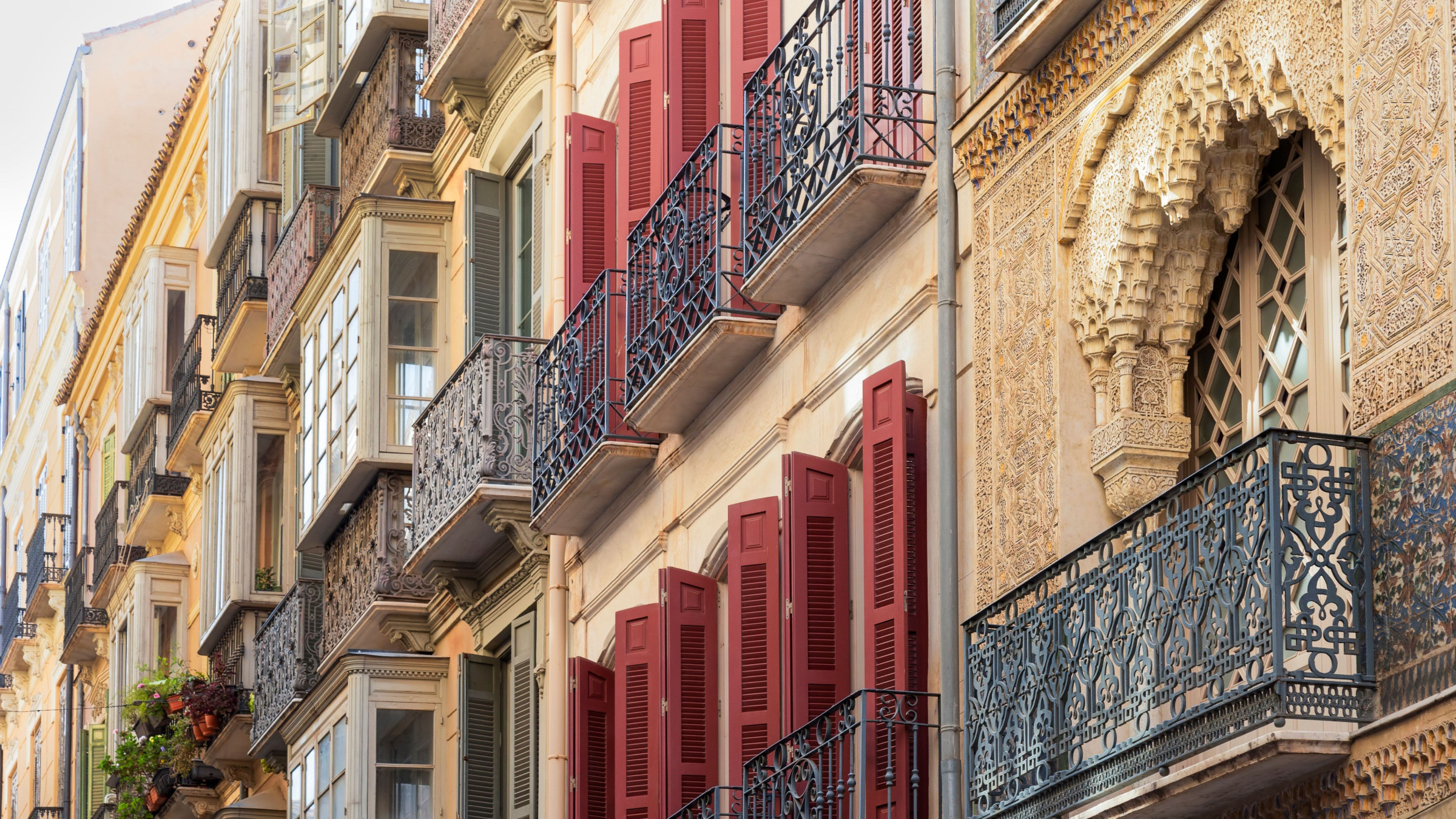
These arcaded passages, once designed to protect merchants and locals from the rain, now give Galiana its distinctive rhythm — sunlight and shadows play across the arches, while above, colorful façades and wrought-iron balconies add charm to the scene.


Galiana Street has changed little over the centuries, and walking through it is like leafing through the city’s living history. Today, it’s lined with cafés, shops, and traditional houses, making it a wonderful place to wander at a relaxed pace and soak up the timeless atmosphere.

👉 Tip: If you’re visiting in the morning or late afternoon, Galiana is especially photogenic when the light hits the arcades just right.
Ferrera Park (Parque de Ferrera)
The Parque de Ferrera is the largest green space in Avilés, covering an impressive 81,000 m². More than just a park, it is considered one of the most beautiful and important parks in Asturias, offering a serene retreat right in the heart of the city.

For centuries, these grounds belonged to the Marquises of Ferrera as part of their private estate. In 1976, King Juan Carlos I officially opened the park to the public, transforming it into a cherished urban oasis.


The park is divided into two clearly distinct sections. The English-style park combines open lawns, wooded areas, a pond, and a charming bandstand, creating a space that feels natural and inviting. The French Garden, on the other hand, reflects the refined symmetry and elegance typical of palace gardens, with formal landscaping and carefully structured layouts that echo its aristocratic past.
Plaza el Carbayedo (El Carbayedo Square)
Plaza el Carbayedo is one of Avilés’ most emblematic squares, a space steeped in history and local life. According to sources, it dates back to medieval times when it served as a bustling marketplace. The name “Carbayedo” comes from “carbayu”, the Asturian word for oak, in reference to the large oak trees that once dominated the square.
Over time, El Carbayedo evolved from a trading hub—known in the past also as Plaza de Abajo or La Ferrería—into a charming social and cultural center. The architectural mix surrounding it reflects different eras, from 17th-century traditional Asturian houses along Calle Rivero to more modern constructions, yet they all blend harmoniously to frame the square’s atmosphere.
San Antonio de Padua, Avilés

Tucked within the historic heart of Avilés stands the Church of San Antonio de Padua, also known as the Church of the Franciscan Fathers, a serene Romanesque building with deep historical significance. Dating back to the 13th century, it is one of the city’s oldest surviving monuments and an exceptional example of medieval religious architecture in Asturias.
San Antonio de Padua is also the final resting place of Pedro Menéndez de Avilés, the city’s most famous son, known as the Adelantado of Florida. His remains are interred inside the church, making it an important stop for those tracing his legacy through the city.
Following in the Footsteps of Pedro Menéndez de Avilés
As you explore the streets of Avilés, you may notice that the city proudly bears the title “Villa del Adelantado.” To understand why, you need to travel back five centuries and step into the life of one of the city’s most fascinating figures: Pedro Menéndez de Avilés, known as the Adelantado of Florida. This accomplished sailor played a decisive role in keeping Florida under the Spanish Crown and is credited with founding St. Augustine in 1565, the first permanent city in what is now the United States.
It is surprisingly easy to follow his story through Avilés. Tradition holds that his birthplace stands in Plaza de Camposagrado, today a lively square animated by the students of the School of Design and presided over by a statue of the painter Juan Carreño Miranda, which lends the space both character and cultural weight. From here, continue your walk to Parque del Muelle, where a monument dedicated to Pedro Menéndez de Avilés honors his maritime legacy. Standing before it, you can almost imagine the young sailor setting out to conquer the seas.
The trail concludes at the Romanesque Church of San Antonio de Padua, also known as the Church of the Franciscan Fathers, a serene and historically significant building. It is here that Pedro Menéndez’s remains are interred, and the site also houses the Museum of Urban History of Avilés, offering deeper insight into the city’s evolution and the Adelantado’s enduring influence.
Spot the Statues: Monuments of Avilés
As you wander through Avilés, your eyes will be drawn upwards and sideways — not just for architectural facades or arcades, but for sculptures and monuments scattered among the parks and plazas.

One of the first you will encounter is the Hélices de Saint-Nazaire, right after you cross the pedestrian bridge from the Ría. These bronze propellers were gifted by Avilés’ sister city, Saint-Nazaire, symbolizing a shared maritime heritage and commemorating the shipbuilding legacy of both cities.
Next, don’t miss Eslabón (The Link), a modern, steel sculpture in Plaza Pedro Menéndez. With interlocking forms, it symbolizes the link between Avilés’ industrial past and its cultural present.

In Plaza de Camposagrado, find the bronze statue of Juan Carreño de Miranda, a celebrated painter born in Avilés and court artist to Charles II. The sculpture stands in front of the baroque palace that now hosts the local art school.
Venture toward Parque del Muelle, and you’ll come upon the monument to Pedro Menéndez de Avilés — the city’s most historic figure, known as the Adelantado of Florida. It’s a striking tribute to the adventurer who left his mark far beyond Asturias.
Nearby, you’ll spot the playful La Foca (the Seal) — a local favorite — a reminder of Avilés’ connection to the estuary and maritime life.
Step into the Story
Imagine wandering through cobbled streets as centuries of history whisper around you. This is your chance to see Avilés through the eyes of those who know it best.
A Seaside Escape: Salinas Beach
If you have extra time during your visit to Avilés, consider making a short detour to Salinas Beach, one of the most beautiful stretches of coastline in Asturias. Located just 4 kilometres from the city centre—less than a 10-minute drive or a pleasant 40-minute walk along the river and coastal path.

This long, golden-sand beach is known for its clean waters, wide shore, and consistent waves, making it a favourite among surfers, swimmers, and those who enjoy a relaxed seaside stroll. Salinas combines a laid-back atmosphere with a touch of sophistication, offering beach bars, cafés, and seafood restaurants where you can linger over a drink while watching the sunset.
Apart from the beach itself, one of the highlights here is the Philippe Cousteau Anchor Museum (Museo de Anclas Philippe Cousteau), dramatically set on a rocky promontory at the western end of the beach. The open-air museum is dedicated to maritime culture and pays tribute to the famous oceanographer with sculptures, maritime artifacts, and a panoramic viewpoint over the Cantabrian Sea.
Practical Information for Your One-Day Visit
- Best Time to Visit: Spring to early autumn for pleasant weather. I visited Aviles in mid-May, and the weather was very pleasant, and it wasn’t crowded.
- Getting There: Avilés is just 30 minutes by train or car from Oviedo and Gijón. The station is a 10-minute walk from the old town.
- Getting Around: Avilés is very walkable—this itinerary can be followed entirely on foot.
- Suggested Duration: 5–7 hours to enjoy leisurely.
Why Avilés is Worth a Day
Asturias’ larger cities often overshadow Avilés, but that’s exactly what makes it so special. Its medieval streets feel authentic, its cultural offerings are world-class, and its compact size allows you to explore at your own pace. In just one day, you can journey through centuries—from Romanesque cloisters to Baroque palaces, industrial heritage, and avant-garde architecture—all while savoring the warm Asturian spirit.