Your First Trip to Egypt Should Feel Magical, Not Overwhelming

This post may contain affilliate links. It means that if you buy something through one of these links, we might get a small commission at no extra cost to you. Affiliate commission helps us keep this travel blog running.
Planning your first trip to Egypt can feel a little unreal at first.
You start with one simple idea, “I want to see the pyramids.” Then suddenly your browser has twenty tabs open. Cairo. Luxor. Aswan. Abu Simbel. Nile cruises. Museums. Tombs. Temples. Desert landscapes. Local markets. What started as a dream trip can quickly turn into a giant puzzle.
And honestly, that can feel like a lot.
Egypt is one of those places people imagine for years before they finally go. Maybe you first learned about it in school. Maybe you saw a documentary about Tutankhamun or the pyramids. Maybe you’ve always wondered what it would feel like to stand in front of something built thousands of years ago and realize it is still here.
That kind of trip should feel exciting. It should feel meaningful. It should feel like something you get to experience, not something you have to survive.
The good news is this, your first trip to Egypt does not have to feel overwhelming. With the right pacing, a bit of thoughtful planning, and a clear idea of what matters most to you, it can feel smooth, rich, and full of wonder.
Start With the Kind of Trip You Actually Want
Most people begin planning Egypt with a checklist.
The pyramids. The Sphinx. The Egyptian Museum or Grand Egyptian Museum. The Valley of the Kings. Karnak Temple. Abu Simbel. A Nile cruise. Maybe a market visit in Cairo. Maybe a stop in Aswan.
That makes sense. Egypt is packed with places that feel too important to miss.
But before you build your route, take a step back and ask yourself a better question. What do you want this trip to feel like?
Do you want deep history every day, with expert stories that help you understand what you’re seeing? Do you want comfort, slower mornings, and beautiful hotels? Are you hoping for great photos, quiet moments, cultural connection, or a little bit of everything?
Because Egypt is not just a destination to check off a list. It is a place to take in.
Some travelers want to stand inside ancient tombs and hear every detail about kings, gods, symbols, and dynasties. Others want to drift down the Nile and let the landscape do some of the talking. Some want the energy of Cairo, with its traffic, markets, mosques, churches, cafes, and constant movement. Others want the calm of Aswan, where the pace softens and the river feels wider.
There is no wrong version of a first Egypt trip. There is only the version that fits you.
Once you know the feeling you want, the planning becomes easier. You stop trying to cram everything in. You start choosing what will make the trip more memorable, not just more full.
Give Yourself Enough Time to Breathe
Egypt has layers. That is part of what makes it so powerful.
You can spend a morning at the pyramids, an afternoon in a museum, and an evening walking through a historic market, and still feel like you’ve only touched the surface. Then you travel south and discover Luxor, where ancient temples and tombs seem to appear everywhere. Then Aswan shows up with its softer light, river islands, and Nubian culture.
Trying to rush all of that can turn excitement into exhaustion.
For travellers who want a fuller introduction without piecing everything together themselves, a thoughtfully planned 14 day Egypt tour can offer a comfortable rhythm between Cairo, the Nile, ancient temples, desert landscapes, and local culture.
That rhythm matters more than people realize.
Cairo deserves more than a quick stop. It is not just the city near the pyramids. It is a living, breathing place with layers of Islamic, Coptic, ancient, and modern history sitting side by side. Luxor also needs time because the sites there are not small. Karnak Temple alone can leave you speechless, and the Valley of the Kings feels different when you are not rushing through it with one eye on the clock.
Then there is the Nile.
A cruise between Luxor and Aswan can help balance the intensity of sightseeing. After days of walking through temples and tombs, there is something calming about sitting by the water and watching palms, villages, fields, and boats pass by.
You do not need endless time. But you do need enough time to let Egypt land.
Choose a Good Guide, Not Just a Good Route
A strong itinerary matters. But in Egypt, the person explaining the places can matter just as much.
You can walk through a temple and admire the columns, carvings, and scale. You will still be impressed. But when someone explains what the symbols mean, why the temple was built, how people used the space, and what those carvings tell us about everyday life, suddenly the place changes.
It becomes human.
That is the real value of a great guide, especially an Egyptologist. They help you see more than stone. They help you understand the stories behind the stone.
Without context, ancient Egypt can feel distant. Beautiful, yes. Impressive, absolutely. But sometimes hard to grasp. With the right guide, a tomb painting becomes a story about belief. A statue becomes a statement of power. A temple wall becomes a record of ambition, devotion, fear, and hope.
And isn’t that why you go in the first place?
Not just to take photos, but to feel connected to something older than your own world.
A good guide also helps with the practical side of travel. They know when sites are busiest, how to move through them, what details people often miss, and how to make the day feel manageable. For a first-time visitor, that kind of support can make a huge difference.
Do Not Try to See Everything
This might be the hardest advice to accept, but it is important.
You do not have to see everything.
Really.
Egypt has so much history that trying to cover it all in one trip is almost impossible. And when you try, the days can start to blur. Another temple. Another tomb. Another early morning. Another long drive. Instead of feeling amazed, you may find yourself feeling tired.
That does not mean you should skip the big sights. Of course you should see the pyramids if that is your dream. Of course Luxor deserves attention. Of course Abu Simbel is unforgettable if you can make the journey.
But leave room for the trip to breathe.
Leave room for a slow lunch. A conversation with a guide. A quiet view of the Nile at sunset. A few extra minutes in a place that unexpectedly moves you. Sometimes the memory that stays with you is not the most famous site. Sometimes it is a small moment you never planned.
Maybe it is the call to prayer echoing over Cairo. Maybe it is the heat of the stone under your hand at a temple. Maybe it is the way the desert turns gold in the late afternoon.
Those moments need space.
A first trip to Egypt should not feel like a race through history. It should feel like an introduction, and a good introduction leaves you wanting more.
Prepare for Cairo’s Energy
Cairo can be intense. There is no point pretending otherwise.
It is loud, busy, crowded, layered, and full of movement. Traffic seems to have its own language. The streets can feel chaotic. The city does not always slow down for visitors who are still adjusting.
But Cairo is also incredible.
It is the kind of city where ancient history and everyday life sit right next to each other. You can see the pyramids in the distance, then find yourself surrounded by shops, cafes, apartment buildings, and honking cars. You can visit historic mosques, Coptic churches, museums, markets, and neighborhoods that hold centuries of stories.
Cairo may not always feel polished. But it feels alive.
That is what makes it unforgettable.
The key is to arrive with realistic expectations. Do not expect a quiet, perfectly controlled city. Expect energy. Expect contrast. Expect beauty mixed with noise and history mixed with daily life.
Give yourself time to adjust. Stay curious. Let the city be itself.
A lot of travelers grow to love Cairo once they stop expecting it to behave like somewhere else. It is not Paris. It is not Rome. It is Cairo, and that is exactly the point.
Let the Nile Slow You Down
After Cairo’s energy and the scale of the ancient sites, the Nile can feel like a deep breath.
There is something about the river that changes the pace of a trip. You are still moving, but it does not feel rushed. The scenery shifts slowly. Palm trees, small boats, fields, villages, and desert edges slide past. Mornings feel softer. Evenings feel quieter.
A Nile cruise is not just a way to get from one place to another. It is part of the experience.
Between Luxor and Aswan, many travelers visit temples along the way, including places that help connect the larger story of ancient Egypt. But the time between visits matters too. Sitting on deck after a full day of sightseeing can help you process what you just saw.
Because Egypt can be emotionally full.
You may spend the morning inside a tomb painted with scenes about the afterlife, then find yourself eating lunch while the river moves beside you. That contrast stays with you. The ancient and the ordinary. The grand and the quiet. The past and the present.
Sometimes the most memorable part of Egypt is not the monument in front of you, but the silence after it.
Pack for Real Life, Not Just Photos
Packing for Egypt is not complicated, but it does deserve some thought.
You will likely walk more than you expect. You may be out in strong sun. Some mornings might start early, especially if you are visiting major sites before the heat or crowds build. You may move between cities, boats, hotels, temples, markets, and religious sites.
Comfort matters.
Bring lightweight clothing that covers your shoulders and knees when needed. Loose, breathable fabrics are your friend. Comfortable walking shoes are a must, not a nice extra. This is not the trip for breaking in new sandals.
You will also want sun protection. A hat, sunglasses, sunscreen, and a refillable water bottle can make long sightseeing days much easier. A small day bag helps too, especially for carrying your camera, tissues, hand sanitizer, lip balm, and any personal essentials.
Think practical, respectful, and comfortable.
That does not mean you cannot dress nicely. It just means your clothes should work for the actual trip you are taking. Egypt is beautiful, but it is also dusty, sunny, busy, and full of uneven paths. Pack for that reality and you will enjoy yourself more.
Expect Wonder, But Give Yourself Grace
A first trip to Egypt can stir up a lot.
There is the excitement, of course. The kind that hits when you see the pyramids for the first time or walk into a temple larger than anything you imagined. But there can also be tiredness, heat, culture shock, and moments when your brain simply cannot take in one more ancient detail.
That is normal.
You are not doing the trip wrong if you feel overwhelmed for a moment. You are standing in places that hold thousands of years of human history. That is a lot for anyone to absorb.
What if the best moment of your trip is not the one you planned?
Maybe it will be. Maybe it really will be the first sight of the Sphinx or the moment you step into the Valley of the Kings. But maybe it will be something smaller. A guide laughing as they explain a detail. A cup of tea. A quiet boat ride. A market stall. A sunset.
Give yourself permission to experience the trip as it unfolds, not only as you imagined it.
Travel is not a performance. You do not have to feel amazed every second. You do not have to understand every symbol or remember every name. You just have to be present enough to notice what moves you.
That is where the magic often is.
Make Space for the Human Side of Egypt
It is easy to think of Egypt only in terms of monuments.
Pyramids. Temples. Tombs. Statues. Museums.
And yes, those places are extraordinary. They are the reason many people come. But the human side of Egypt is just as important, especially on a first trip.
That might mean talking with a local guide about daily life. It might mean learning about Nubian culture in Aswan. It might mean walking through a market and noticing the colors, spices, lamps, fabrics, and voices all around you. It might mean trying a simple meal and realizing that food can tell its own story.
These moments warm up the trip.
They remind you that Egypt is not only ancient. It is current. It is lived in. It is full of people going to work, raising families, telling jokes, making food, sharing stories, and welcoming travelers into small pieces of their world.
The temples may impress you. The people may stay with you.
That balance is what makes the trip feel complete. You get the grandeur of ancient history, but you also get the texture of real life. You see the famous places, but you also feel the country around them.
Let Your First Egypt Trip Be an Opening, Not a Finish Line
One of the best things you can do on your first trip to Egypt is let go of the idea that you have to do it perfectly.
You will not see everything. You will not understand everything. You may forget names of pharaohs. You may mix up a temple or two. You may need a break when your itinerary says it is time for another site.
That is fine.
The goal is not to master Egypt in one visit. The goal is to meet it.
Meet it with curiosity. Meet it with patience. Meet it with enough structure that you feel supported, but enough openness that the trip can surprise you.
Because Egypt has a way of doing that.
You might arrive thinking the pyramids will be the highlight, only to find yourself moved by a quiet tomb in Luxor. You might expect the temples to impress you most, then realize your favorite memory is watching the Nile at dusk. You might think you are going for history, then come home thinking just as much about the people, sounds, colors, and small moments in between.
That is what makes Egypt special. It is not one experience. It is many experiences layered together.
Your first trip to Egypt should feel magical, not overwhelming. It should give you room to wonder, room to rest, room to ask questions, and room to be surprised.
So plan carefully, but do not plan the life out of it. Choose comfort where it matters. Choose guidance when it adds meaning. Choose enough time to see the big places without losing the small ones.
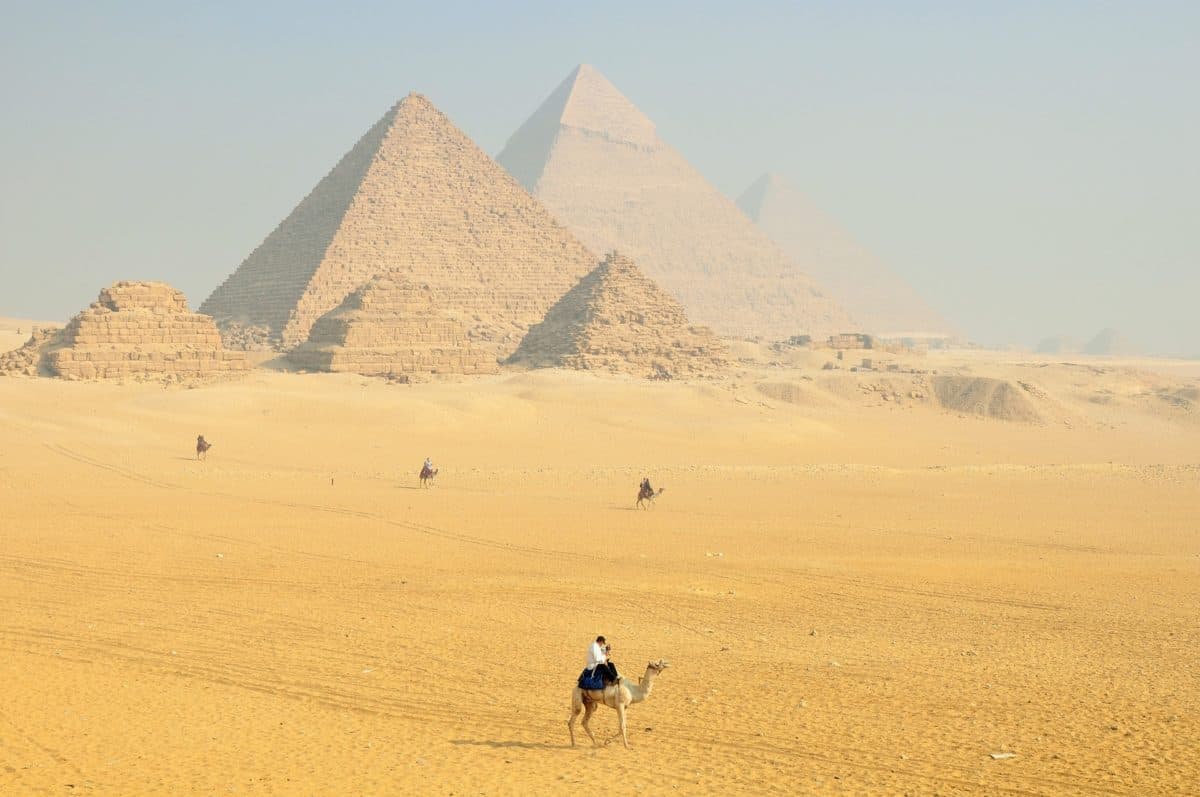
And when you finally stand there, in front of the pyramids, beside the Nile, inside a temple, or under a sky that has watched over travelers for thousands of years, let yourself pause.
Take it in.
You made it to Egypt. That alone is something worth remembering.
Some other articles you might be interested in:
Activities and tours to take from Hurghada