Where to visit in Egypt with kids?

Here’s a proper conundrum. What should you see in Egypt with kids?
We squeezed a lot into our 10 days in Egypt and could have still done more as well as adding extra time to relax on the Red Sea coast.
I’d definitely recommenced exploring further than Cairo. The pyramids are one of Egypt’s best known attractions but there’s so much more to the country’s historic treasures.
To be honest, it was Egypt’s temples that impressed us most.
We also wouldn’t have missed Southern Egypt. Reaching Abu Simbel from Aswan is an adventure in itself and the Valley of the Kings in Luxor was much more impressive than we had imagined.
*This post contains affiliate links. If you click and buy something, I may earn some commission. This is at no extra cost to you but helps me cover the costs of running this website. See my privacy policy and disclosure policy for more information.*
Straight to the point: our top five places in Egypt
- Egypt offers incredible sites for families; the Pyramids of Giza are a must-see, even if they’re not the top choice.
- Kom Ombo impresses with its mummified crocodiles and unique hieroglyphs, making it a fascinating visit.
- The Temple of Philae is accessible by boat and boasts a beautiful setting
- Valley of the Kings surprises with well-preserved hieroglyphs and impressive ancient engineering.
- Deir el-Bahri, Queen Hatshepsut’s temple, offers a unique design linked to a fascinating historical figure.
Want to find out more? Here’s our top five places for families visiting Egypt and why you should go:
The Pyramids of Giza

Even though they weren’t our favourite destination who could go to Egypt without seeing the pyramids? Especially with travelling with kids!
After all they are the most recognisable landmark and one many little ones will know from Go Jetters.
Add a trip to Cairo’s Egyptian Museum (or the Grand Egyptian Museum when it opens) to build a foundation of knowledge that will enrich the rest you time in Egypt.
Kom Ombo

Mummified crocodiles…need I say more?
OK, I will. Kom Ombo’s collection of 300 preserved crocs were found buried at this Roman-Greaco site beside the River Nile.
The Temple itself is dedicated to two gods: Sobek and Horus.
Much of it is ruined but there’s plenty of incredible hieroglyphs to see including one depicting a mother giving birth. This kind of image has not been found nowhere else in Egypt.
The Temple of Philae

A visit the Temple of Philae requires a boat trip to the island of Agilkia.
The temple was moved here in the 20th Century during the construction of the Aswan Dam which led to the original Philae site being flooded.
It’s a beautiful temple and its location makes it an extra special place to explore.
Valley of the Kings
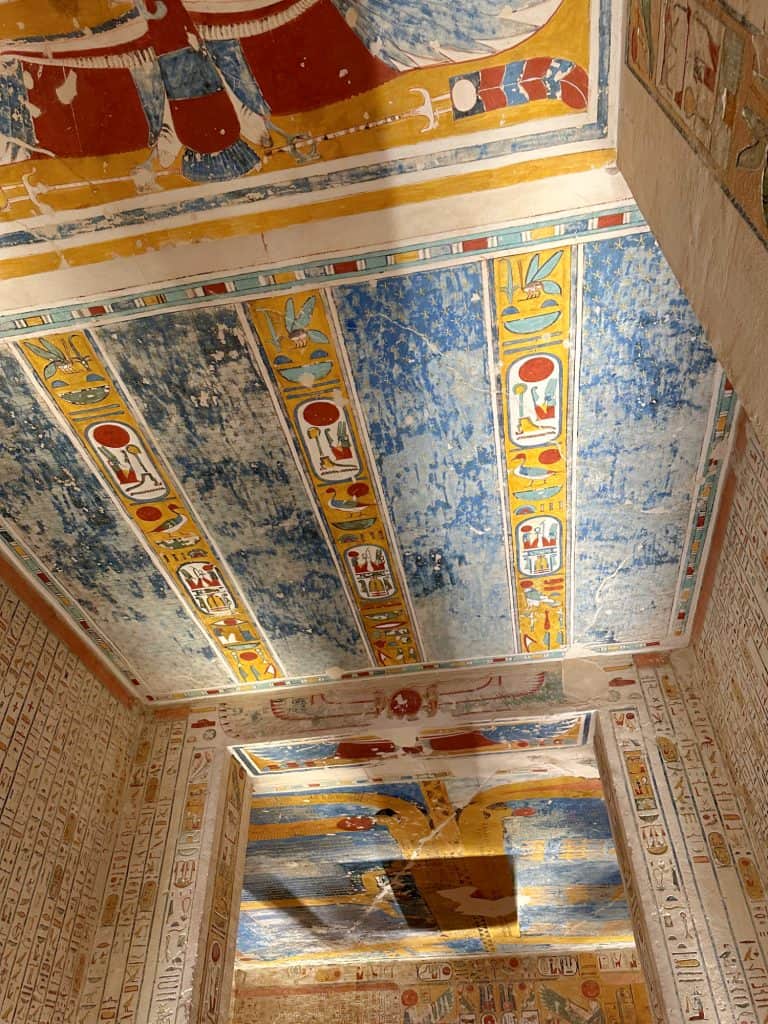
I’m not sure why but I wasn’t expecting much from the Valley of the Kings. Tunnels cut into sand with a bare chamber at the end was what I suppose I had in mind.
But the Valley offered so much more. The colours of the hieroglyphs have been shielded from the sun and grave robbers never hung around long enough to bother defacing them in the way some temples have suffered.
They are also a marvel of ancient Egyptian engineering. It’s amazing to think that the architects, artists and workers spent years creating them below the surface.
Deir el-Bahri

Queen Hatshepsut’s mortuary temple was my favourite Egyptian temple. Not only is it a unique design, it was interesting to experience a place inspired by such a fascinating figure in Egypt’s history.
Hatshepsut isn’t born to rule as pharaoh. But she talked herself into the job and ruled alongside her younger brother and the rightful heir, Tutmose III.
She built Deir el-Bahri temple for the god Amun and, according to ancient gossip, the architect was her lover. After she died and was buried in the Valley of the Kings he had a tunnel built from his own tomb to hers.
Bonus place: Abu Simbel
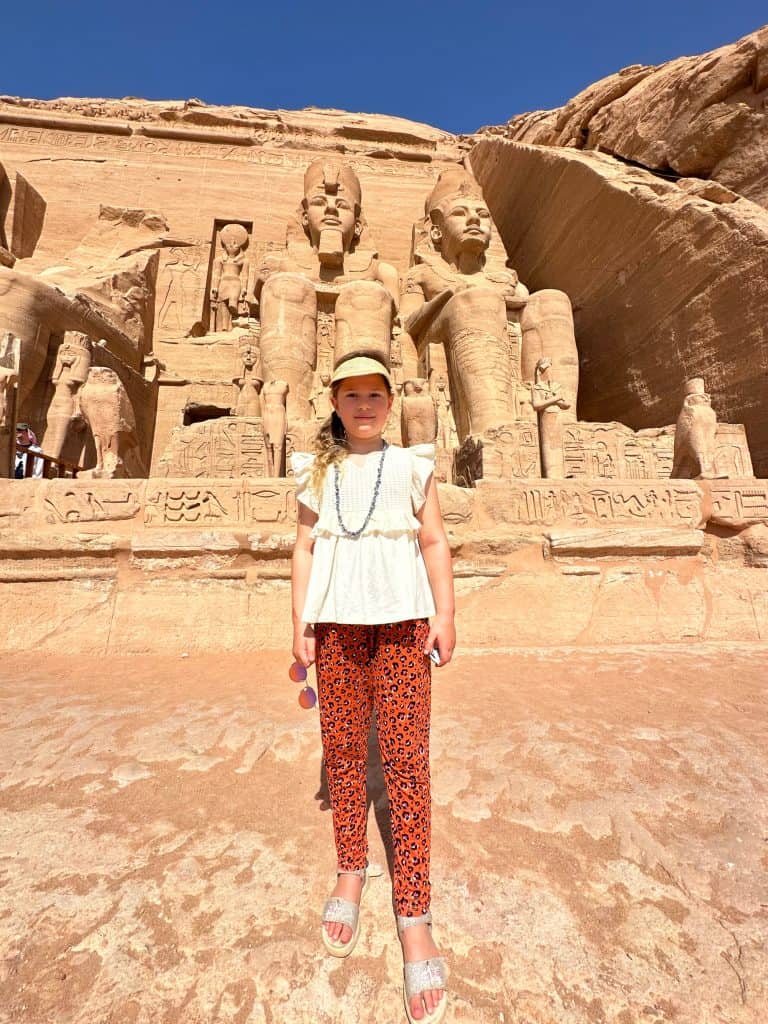
OK, so I couldn’t miss this one off. The temples of Rameses II and Queen Nefertari on the edge of Lake Nassar are incredible. BUT! It’s a long drive and families with young kids might find it too much.
We visited as a day trip from Aswan which meant setting off at 4.30am and seven hours in our private mini bus. If you do visit Abu Simbel, take a private tour to maximise your comfort.
Also plan in some down time on either side and pack all the snacks!
Want more tips for visiting? Read our full Egypt travel guide.
Find out more about each of these places and all of destinations we visited by reading about our 10 day Egypt itinerary.
Egypt books for kids and families visiting Egypt
We gave each of our girls a book about Egypt before our trip. It was a great way to get them excited and remind us all about the extraordinary places we were lucky enough to be visiting.
We can personally recommend National Geographic’s Ancient Egypt: Level 4 book for children aged seven and up and National Geographic’s 1,000 Facts About Ancient Egypt book for bite-sized information to share with children of all ages.
Younger children might prefer a sticker book. The British Museum does a lovely one that allows kids to add stickers to Egyptian scenes. And here’s plenty a short tales for young readers in Meet the Egyptians, which is part of the Horrible Histories book series.
If you’re looking for book about Egypt for yourself I can recommend Lonely Planet.
I answer this more fully in my full travel guide. Personally, we felt safe. We stuck to the main tourist areas and had a guide throughout our holiday. Always check the latest government travel advice. The UK government advises against travelling to some areas within Egypt.
Yes. Each person visiting Egypt must have a tourist visa unless you are only staying in the Sharm el Sheikh, Dahab, Nuweiba or Taba resorts and are there for no more than 15 days.
December and February half term are the best times to visit Egypt for sightseeing when the temperature averages at 20°C making exploring much easier. Between May and September the tourism season in Egypt winds down due to the heat. Temperatures rise above 40°C, which can make sightseeing difficult, particularly with children.